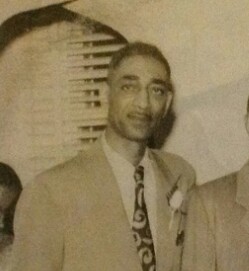
When Clarence Bernard Orme Sr. was born on April 3, 1899, his father, Paul Orme, was 23 and his mother, Mary Walker, was 19. He married Agnes Franklin on May 14, 1921, but this marriage was short-lived. He then married Gillia Amelia Bannister and they had three children together: Clarence Jr, Mary and Kenneth.
Clarence Orme was my Great uncle and the oldest brother of my grandmother, Evelyn Orme Caruthers. Uncle Clarence died before I was born and I have vague memories of my grandmother talking about him. It wasn’t until a few years ago I discovered that he had an interesting legacy with a local Negro League Baseball team.
Clarence was born in Chamois, Missouri a small town about 45 minutes east of Jeff City. Chamois rests on the banks of the Missouri river and was a depot on the Missouri Pacific Railroad. The rail tracks run parallel to the river from Chamois headed into St. Aubert, Missouri which is the final town the Orme family would own property in. Chamois was a “Sundown Town” and did not have a large African-American population. The last Black family to live in Chamois was in the late 1970’s. As a young boy, Clarence and his cousins would walk those railroad tracks to attend Maceo School for Colored Children, the 2nd school of its kind in Linn County, Missouri. Clarence’s parents were not married and it was difficult to locate him as a child on the US Census. I was finally able to connect him with him as “Clarence Walker” living with his grandparents. I assume his mother was too young to take care of him and his father Paul, left for job opportunities in Kansas City, Ks. After he turned 18, Clarence moved to Kansas City to be near his father and changed his last name to Orme. Back in those days you could easily change your name without having to go through a legal process.
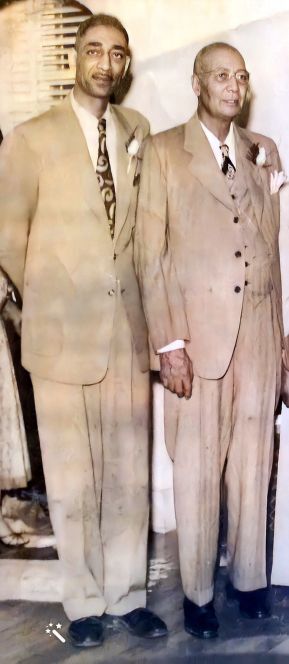
Clarence was a striking man and stood 6’6″ towering over his brothers and father Paul. Paul himself was at least 6’2. As a young girl his granddaughter Karen Orme would recall he was tall, “like a mannequin”. Clarence worked for Armour Meat Packing Company. His father Paul worked for Cudahy Meats both in the Kansas City Stockyards. His father Paul was a “knocker” and hit the animals with a large sledge-hammer knocking the bovine unconscious. In the early decades of the 20th century, the packing houses were the single largest employer of African-American laborers in Kansas City. Despite the employment Blacks and Mexicans had separate entrances into the warehouses.
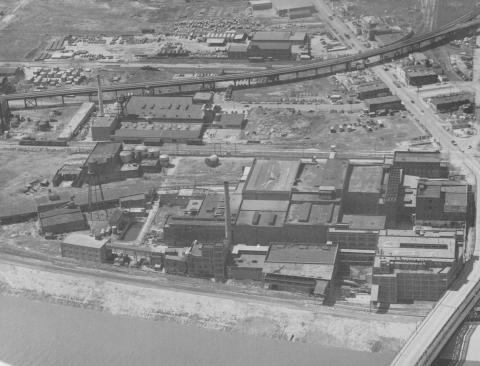
The Great Flood of 1951 closed Cudahy Meats and Armour Packing closed shortly after in 1965.
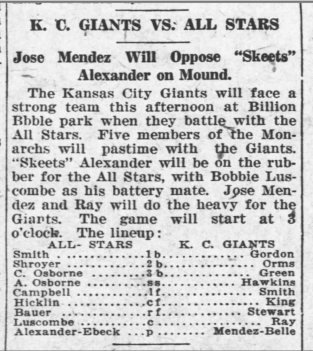
Clarence would work as a butcher for over 20 years and part-time cleaning coach cars for the railroad. But he got the most enjoyment playing baseball. As most family lore are passed down, I heard a few that Uncle Clarence played for a Negro League. Not finding anything on my own I found a website that tracked and indexed NLB players. Gary Ashwill who runs the website “Agate Type” helped uncover articles that confirmed that Uncle Clarence did indeed play baseball for local Kansas City Monarchs. Possibly as a sub in June 1920 during a 3-game series against the Cuban Stars. The below article mentions Arms as 2nd baseman.
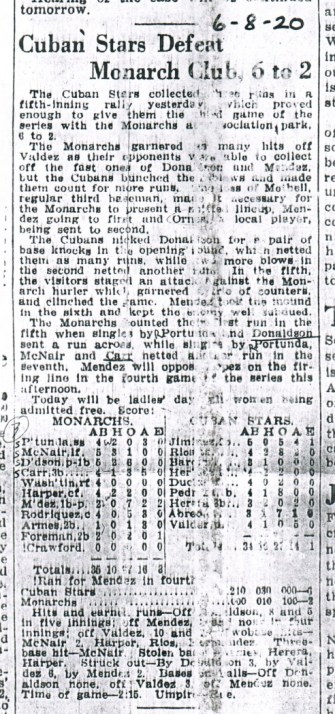
Clarence is incorrectly billed as Armes or Ornes in the series game articles. This is not surprising because the name Orme is pronounced with a brogue of some sort to sound like the word arm. I used to wonder why my Grandfather would call my Grandmother Evelyn arm! when he called for her through the house. It was confusing as a child to wonder why he would call her a body part, but now makes sense. I have also found many US censuses and archives where the name is misspelled as Arme.
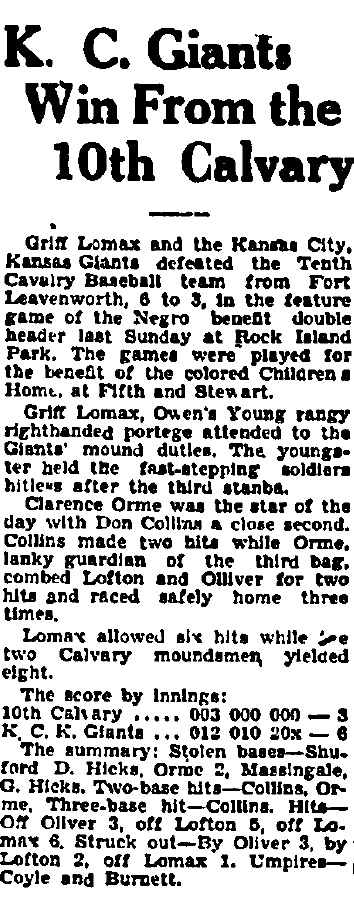
Clarence mainly played for the Kansas City, Ks Giants from 1920 to 1933. Some sites list the KC Giants as a mid level Negro league that was active from 1909-1911. Not to be confused with the Royal Giants, another Kansas City, Missouri rival team. Clarence was part of the Giants team that was rebuilt by Jack Johnson and several Topeka Giants players in the 20’s. He was sometimes paid with live chickens.
Clarence would live the rest of his life in Kansas City and eventually he suffered a stroke and would cease speaking. He died on June 12, 1968, in Kansas City, Missouri, at the age of 69.
You can find his baseball stats here although they do not currently include the KC Giants.


You must be logged in to post a comment.