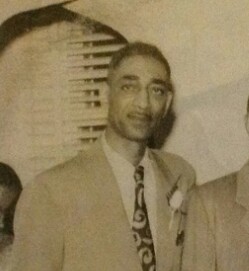
Clarence Orme: A Kansas City Giant

When Clarence Bernard Orme Sr. was born on April 3, 1899, his father, Paul Orme, was 23 and his mother, Mary Walker, was 19. He married Agnes Franklin on May 14, 1921, but this marriage was short-lived. He then married Gillia Amelia Bannister and they had three children together: Clarence Jr, Mary and Kenneth.

Clarence Orme was my Great uncle and the oldest brother of my grandmother, Evelyn Orme Caruthers. Uncle Clarence died before I was born and I have vague memories of my grandmother talking about him. It wasn’t until a few years ago I discovered that he had an interesting legacy with a local Negro League Baseball team.

Clarence was born in Chamois, Missouri a small town about 45 minutes east of Jeff City. Chamois rests on the banks of the Missouri river and was a depot on the Missouri Pacific Railroad. The rail tracks run parallel to the river from Chamois headed into St. Aubert, Missouri which is the final town the Orme family would own property in. Chamois was a “Sundown Town” and did not have a large African-American population. The last Black family to live in Chamois was in the late 1970’s. As a young boy, Clarence and his cousins would walk those railroad tracks to attend Maceo School for Colored Children, the 2nd school of its kind in Linn County, Missouri. Clarence’s parents were not married and it was difficult to locate him as a child on the US Census. I was finally able to connect him with him as “Clarence Walker” living with his grandparents. I assume his mother was too young to take care of him and his father Paul, left for job opportunities in Kansas City, Ks. After he turned 18, Clarence moved to Kansas City to be near his father and changed his last name to Orme. Back in those days you could easily change your name without having to go through a legal process.
50-anniversary-copy-Enhanced-Color-Restored

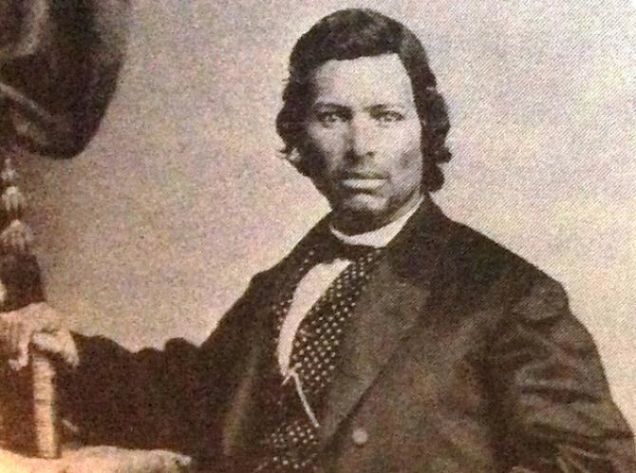
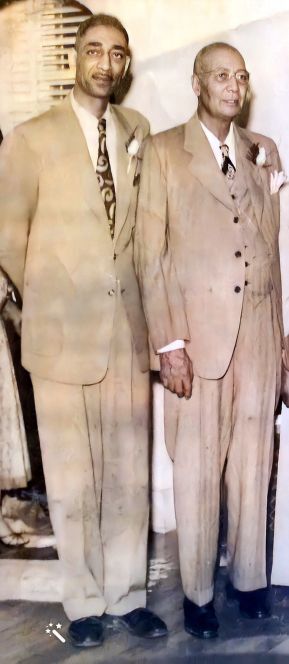
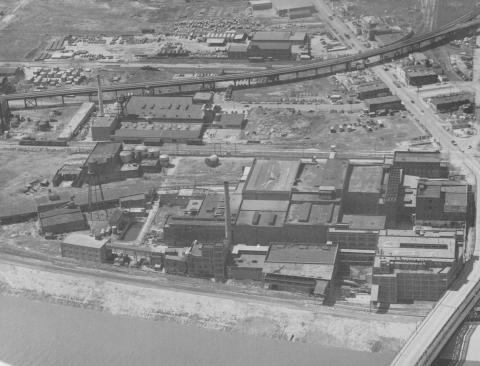
Clarence was a striking man and stood 6’6″ towering over his brothers and father Paul. Paul himself was at least 6’2. As a young girl his granddaughter Karen Orme would recall he was tall, “like a mannequin”. Clarence worked for Armour Meat Packing Company. His father Paul worked for Cudahy Meats both in the Kansas City Stockyards. His father Paul was a “knocker” and hit the animals with a large sledge-hammer knocking the bovine unconscious. In the early decades of the 20th century, the packing houses were the single largest employer of African-American laborers in Kansas City. Despite the employment Blacks and Mexicans had separate entrances into the warehouses.
cudahy-mvsc-10004148
Cudahy Meat Packing Courtesy of pedeergastkc.org

The Great Flood of 1951 closed Cudahy Meats and Armour Packing closed shortly after in 1965.

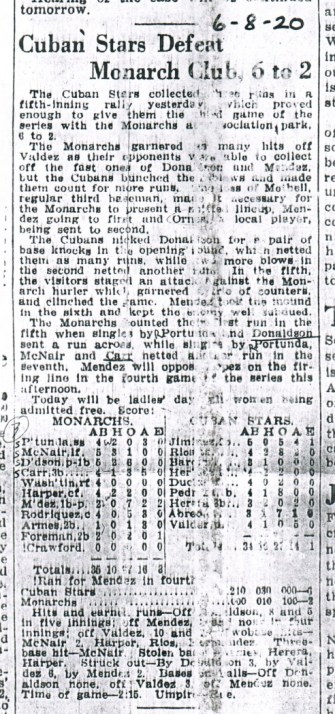
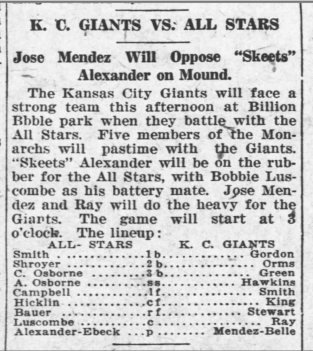
Clarence would work as a butcher for over 20 years and part-time cleaning coach cars for the railroad. But he got the most enjoyment playing baseball. As most family lore are passed down, I heard a few that Uncle Clarence played for a Negro League. Not finding anything on my own I found a website that tracked and indexed NLB players. Gary Ashwill who runs the website “Agate Type” helped uncover articles that confirmed that Uncle Clarence did indeed play baseball for local Kansas City Monarchs. Possibly as a sub in June 1920 during a 3-game series against the Cuban Stars. The below article mentions Arms as 2nd baseman.
6a00d8341ccce053ef01a73e146297970d-500wi
Courtesy of Gary Ashwill

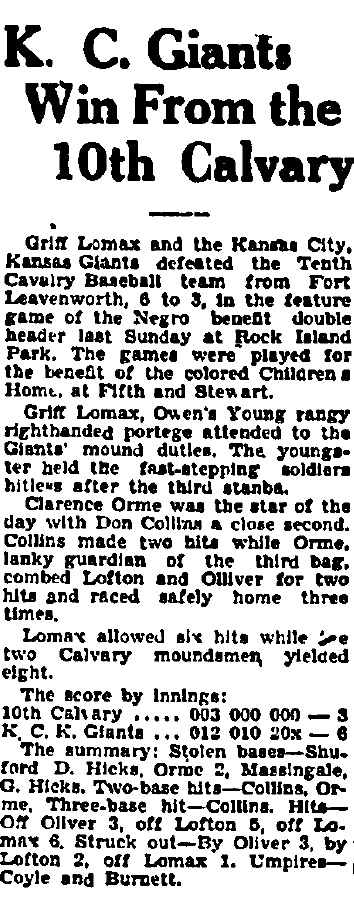
Clarence is incorrectly billed as Armes or Ornes in the series game articles. This is not surprising because the name Orme is pronounced with a brogue of some sort to sound like the word arm. I used to wonder why my Grandfather would call my Grandmother Evelyn arm! when he called for her through the house. It was confusing as a child to wonder why he would call her a body part, but now makes sense. I have also found many US censuses and archives where the name is misspelled as Arme.
6a00d8341ccce053ef01a73e1460b2970d-500wi
Courtesy-Genealogy Bank-Topeka Plaindealer

Clarence mainly played for the Kansas City, Ks Giants from 1920 to 1933. Some sites list the KC Giants as a mid level Negro league that was active from 1909-1911. Not to be confused with the Royal Giants, another Kansas City, Missouri rival team. Clarence was part of the Giants team that was rebuilt by Jack Johnson and several Topeka Giants players in the 20’s. He was sometimes paid with live chickens.
may 1921
May 1921-Newspapers.com

Clarence would live the rest of his life in Kansas City and eventually he suffered a stroke and would cease speaking. He died on June 12, 1968, in Kansas City, Missouri, at the age of 69.

You can find his baseball stats here although they do not currently include the KC Giants.
A Baby In A Shoe Box

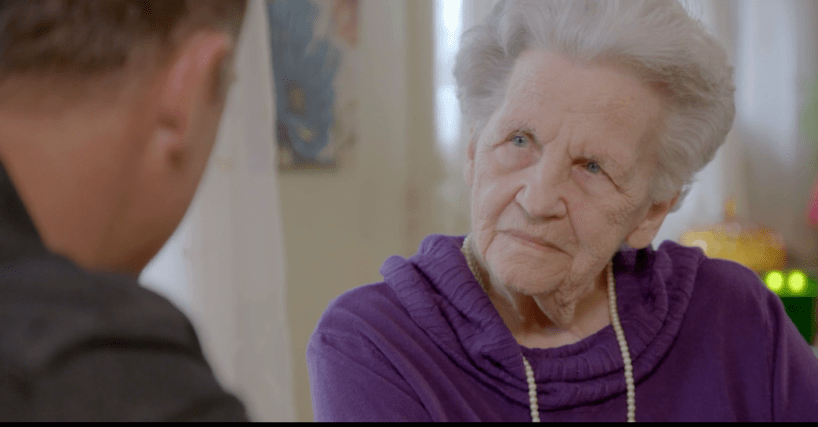
Screenshot 2018-11-15 at 7.46.43 PMBeing the daughter of an adopted woman for years I wondered who her mother was. When I was in college my mother hired a private investigator and found my grandmother Mabel who just recently passed away.  There are so many heart breaking stories out there about children being abandoned or given away and never locating or finding our the reason why they were given up for adoption. This season of “Long Lost Family” starts off with a jaw dropping revelation of a baby left in a shoe box at an Ohio gas station. The baby Lisa, now grown searches for her mother. Chris, one of the shows investigators locates an elderly woman in hopes of uncovering which of her family members may have given up a baby in 1960. She paused and answered, “Me.”

Follow the link below to watch the full heart stopping episode. Click here

The African-American Brick Wall

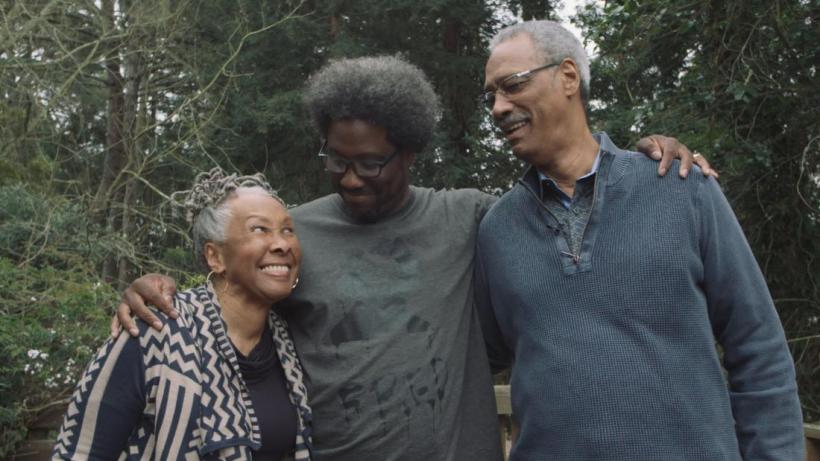
That’s how genealogical researchers have described the time period before emancipation in the US, when enslaved African Americans were treated as property — including on official documentation. W. Kamau Bell is one of my favorite comedians and video journalists. Click here to view more on his recent search to verify the accuracy of family lore.Go here

For the full 3 part videos  Visit

Photo Credit: CNN

WHY MOST BLACK PEOPLE DON’T HAVE “INDIAN IN THEIR FAMILY”

You’ve probably heard it before. Perhaps from your friends or some random person you met. More often than not, many Black people say that they have “Indian” in their family. So much so that it’s become a running joke in the Black community. But some really do believe that they do have a lineage of Native American in their bloodline because of the grade of their hair and/or high cheek bones. But in looking at the true line of African Americans, the truth is, many do not have “Indian in their family”. Here’s why:

Those high cheekbones and that straight black hair derive from our high proportion of white ancestors and not, for most of us, at least, from our Cherokee great-great-grandmother on your daddy’s side (*sigh*). DNA doesn’t lie (just ask Maury).

Here are the statistics: Whereas virtually all African Americans have a considerable amount of European ancestry in their genomes, only 19 percent have at least 1 percent Native American ancestry, and only 5 percent of African American people carry more than 2 percent Native American ancestry. How do these percentages translate into ancestry? Well, if you have 5 percent Native American ancestry in your mix, that means you had one Native American ancestor four to five generations back (120 to 150 years ago). If you have 2 percent Native American ancestry, you had one such ancestor on your family tree five to nine generations back (150 to 270 years ago). One percent of Native American ancestry means that this ancestor entered your bloodline six to 10 generations back (180 to 300 years ago).

Hunt for the Golden State Killer


Websites that do DNA testing for family matches have recently been used to search for criminals including the elusive Golden State Killer. The use of using these sites for DNA has come under ethical scrutiny. Some sites, do have a disclaimer that your samples may be used for other purposes. To read the latest on how detectives used DNA matches  Click here

Are Mormons baptizing your Jewish ancestors?

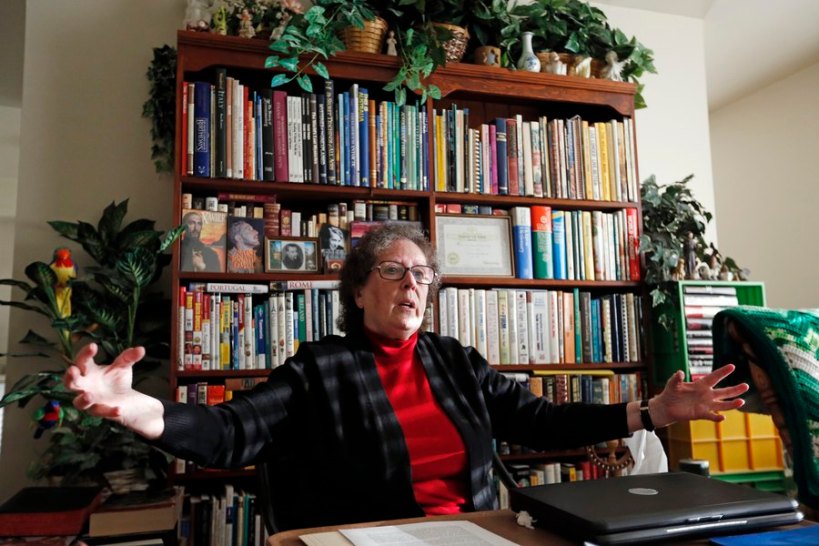
By Brady Combs AP Dec 21, 2017 Photo credit of Helen Radkey (AP Photo/Rick Bowmer)

Mormons are posthumously baptizing Holocaust victims as well as grandparents of public figures like Donald Trump, Hillary Clinton and Steven Spielberg, despite church rules intended to restrict the ceremonies to a member’s ancestors, according to a researcher who has spent two decades monitoring the church’s massive genealogical database.

 The discoveries made by former Mormon Helen Radkey and shared with The Associated Press likely will bring new scrutiny to a deeply misunderstood practice that has become a sensitive issue for the church.

The Utah-based faith, in a statement, acknowledged the ceremonies violated its policy and said the rites would be invalidated, while also noting it has created safeguards in recent years to improve compliance

     Proxy baptisms are tied to a core church teaching that families spend eternity together, but the baptisms do not automatically convert dead people to Mormonism. Under church teachings, the rituals provide the deceased a choice in the afterlife to accept or reject the offer of baptism.

     The Church of Jesus Christ of Latter-day Saints is the only major religion that baptizes for the dead, and the ritual has contributed to struggles by the faith to combat the mischaracterization of its beliefs.

     The church’s stance on family and the afterlife is behind a massive collection of genealogical records the faith compiles from around the world and makes available to the public through its website http://www.familysearch.org . Proxy baptisms are recorded in a password-protected part of the database accessible only to church members.

     The ceremonies first drew public attention in the 1990s, when it was discovered they were performed on a few hundred thousand Holocaust victims, which Jewish leaders condemned as grossly insensitive.

     The posthumous baptizing of Holocaust victims reopens Jewish wounds from being forced in the past to convert to Christianity or face death or deportation, Jewish genealogist Gary Mokotoff said.

     The LDS Church in 1995 established a rule barring baptisms of Holocaust victims except in rare cases where they are direct ancestors. It also bars proxy baptisms on celebrities.

     But periodic controversies erupted when new proxy baptisms were found listed in the church’s genealogical database, including Radkey’s 2012 discovery of one performed on Anne Frank. The church apologized then, sent a letter to members reiterating its guidelines and announced the creation of a firewall aimed at preventing the inappropriate use of proxy baptisms. Click here to read entire article


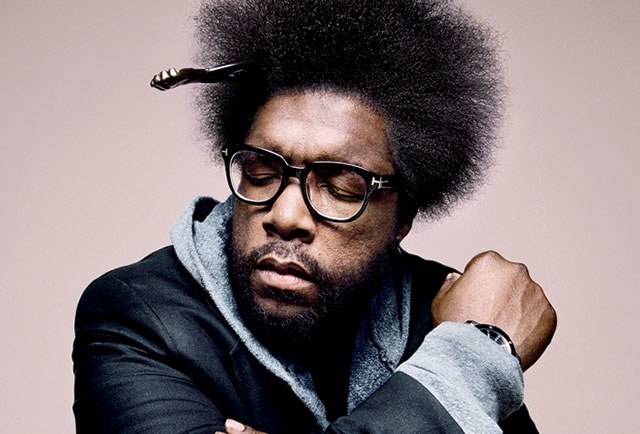
Questlove’s Unusual history

WOW! Did you guys watch the last episode of Finding Your Roots? I’ve uncovered alot of interesting African-American history but none as astounding as what Dr. Gates just found with Questlove (from the music group The Roots). Quest’ response tugged at the heart as he discovered his 3X great grandparents came on the last slave ship to enter the US and the only African-American on the show to have this discovery! Click here to see Time magazine clip

Photo credit: Vanity fair

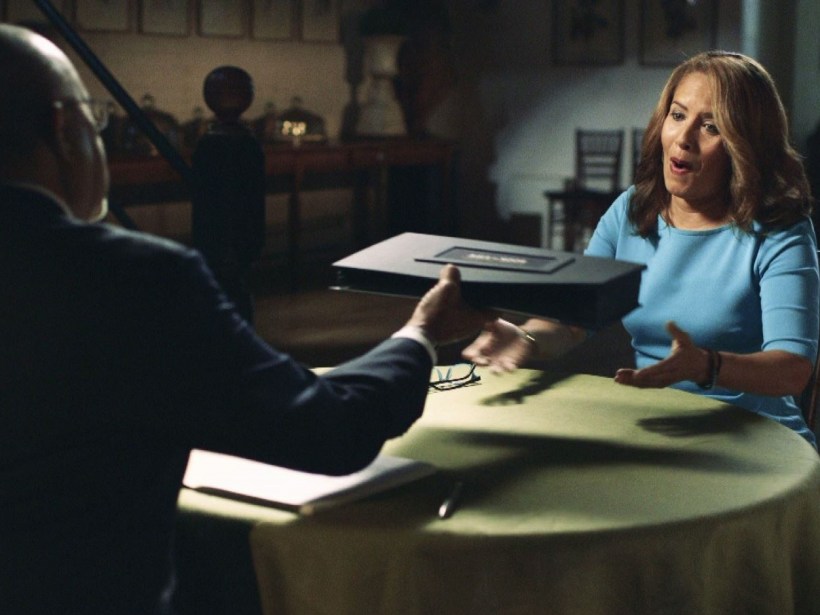
Black Like Me

On this weeks episode of FYR-Suzanne Malveaux discovers that her roots include a black slave owner, a French-Canadian fur trader, and a Native American from the Kaskaskia tribe. Along the way, our guests are reminded that there is no universal African American narrative — that there are as many ways to be black as there are black people. Click here to see the preview

Malveaux-Roots