Cities of the Dead

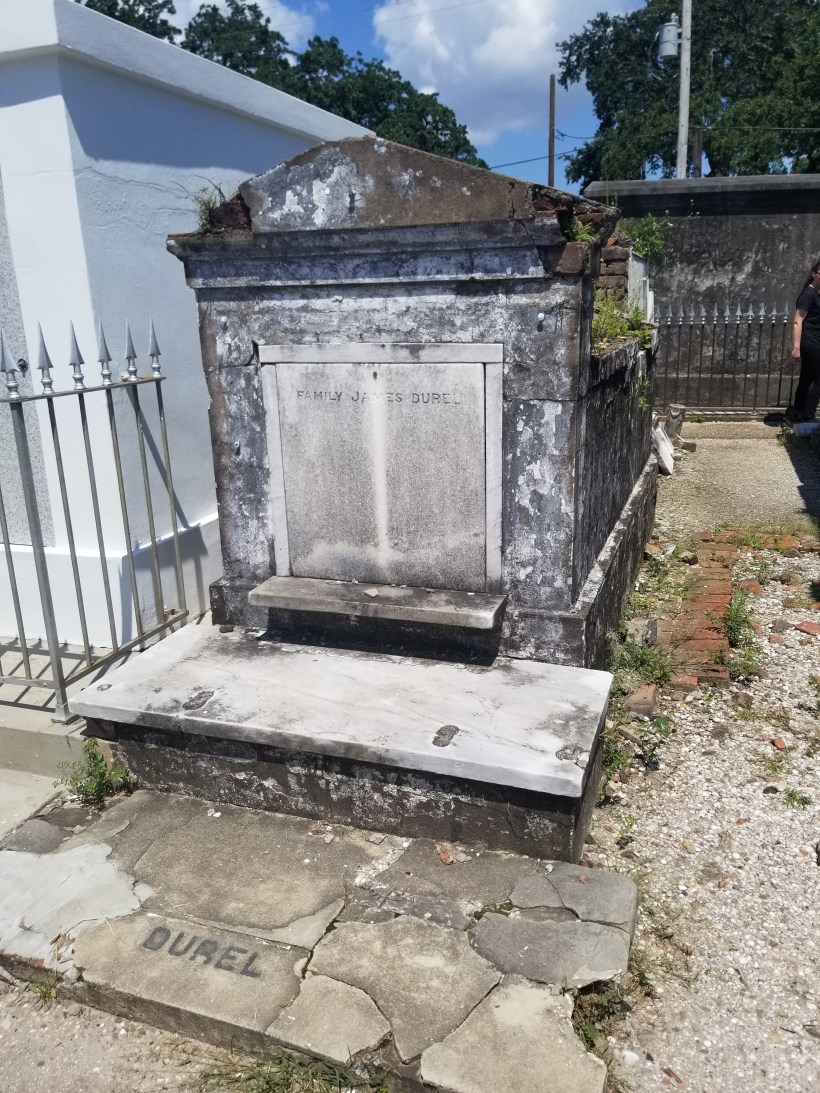
I spent this week in New Orleans, working a medical conference. I had a little time on my hands and went on a Cemetery tour. My tour guide Stella from Haunted History Tours was excellent! Not only knowledgable but enthusiastic and engaging. I learned a lot about all those spooky above ground. One of the first things you notice when arriving to New Orleans is the above ground tombs seen off I-10 in Metairie. The cemetery I visited was St. Louis Cemetery #1, one of the oldest and most famous built in 1789.
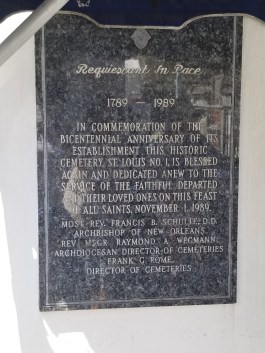
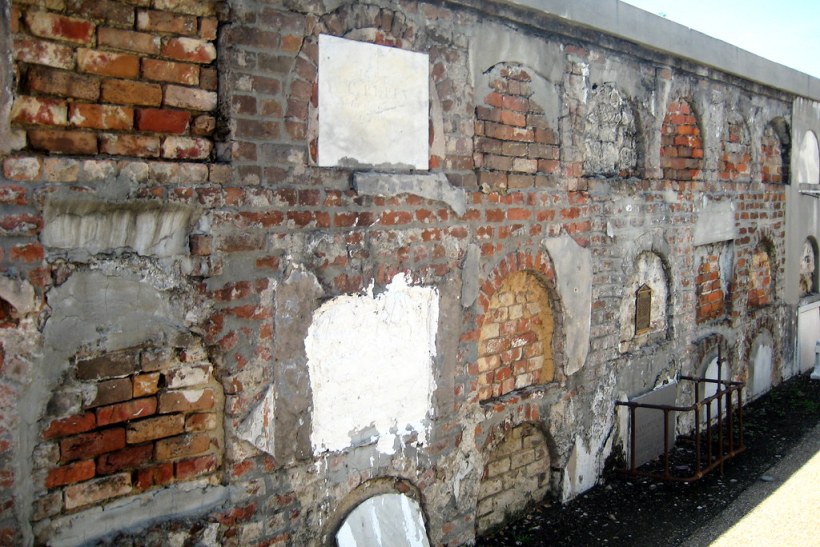
20190725_110657The Cemetery is one square block and is fenced in by high walls of brick, some of the portions are actually tombs itself. These walls serve as a multi-person final resting place, not necessarily a family tomb or Society.
2518933496_56abc0de5c_b
Wall vaults of multiple persons laid to rest

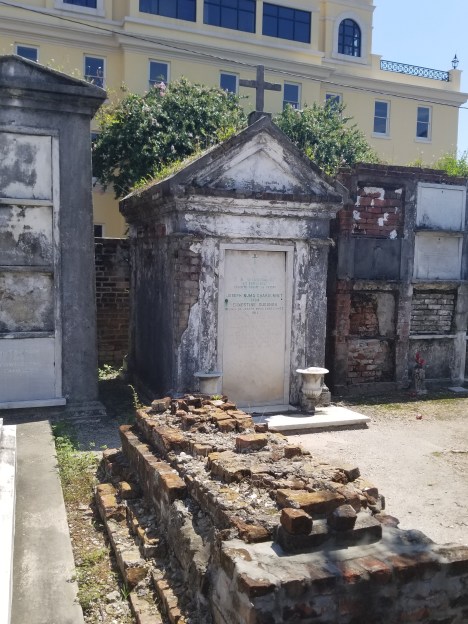
St. Louis Cemetery #1 is truly a little city. The monuments and tombs wind around in intricate pathways. Many burial sites are crumbled and falling apart. These generally do not have living family members that take care of the tombs. Those that are have a placard that reads “perpetual care” at the foot. These are tombs that have a trust that goes toward upkeep.
20190725_111928
Crumbling burial site.

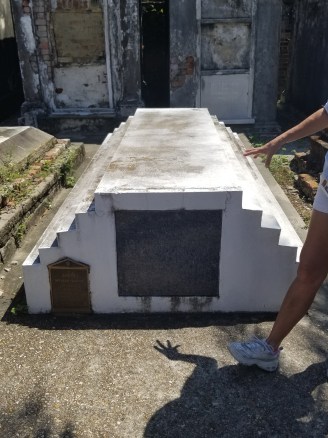
The above ground tombs come in a variety of designs. Some are flat and are only one small step above ground similar to copings or ledger tombs. Some are step tombs like the one below.  Then, we have the ones that look like miniature houses.
20190725_111943
Step tomb

Burying the dead in New Orleans proved to be a problem that the first European inhabitants faced. The city of New Orleans is below sea level. When European settlers put coffins under six feet of earth, they found that the water level would often rise above them. Since the coffins were filled with air. The water sometimes pushed them up through the earth which caused caskets and bodies to pop up in the most unexpected places. They attempted to solve this by drilling holes into the caskets and weighting them down with rocks however, this caused decayed rotten bodies to seep into the earth and added to the already putrid smell of the city. The solution was Wall Vaults or Oven Vaults. 

Oven Vaults

Because of the sea level in New Orleans Vaults or “Oven Vaults” were approved by the Spanish Government.  St. Louis Cemetery #1 was built when St. Peter’s Street cemetery ran out of room and is the first approved above ground cemetery in the city. The land was consecrated by the Catholic Church.  It is important to note that everyone no matter their race were buried in St. Peter’s cemetery because Catholicism was the only religion allowed in the city in the early 1700’s.
20190725_112040
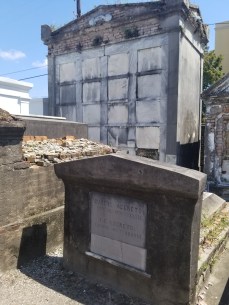
Society oven vault with 20 openings. All ashes whether family or not get pushed to the cave that lies underneath the structure

Above- small oven vault in front and a larger “Society” Vault in the back. Most vaults were for generations of family members. If you didn’t have one established for you family, you could “buy” a spot in a society.

The shock of death

The vaults are called oven vaults because of the subtropical climate in New Orleans. Made of granite or marble once a body is encased it takes just a few months for a body to break down and basically cremate itself. After a year mostly bones are left. The surprise that I found was that once the bones are broken down, they are pushed to the back of the vault toward a chute. The debris falls through the chute in a caveau or “cave” underneath. This makes room for the next person that passes away. Each vault could house generations of family members, who’s ashes are then mixed together underneath. Most family tombs have the family name listed at the top and the names are listed on a plaque or ledger on the front in descending date of death. Once you run out of room on the plaque, it is moved and fastened to the side of the vault and a new one is affixed to the front. Most have a screw or bolt that can be removed for the next body.
20190725_115426
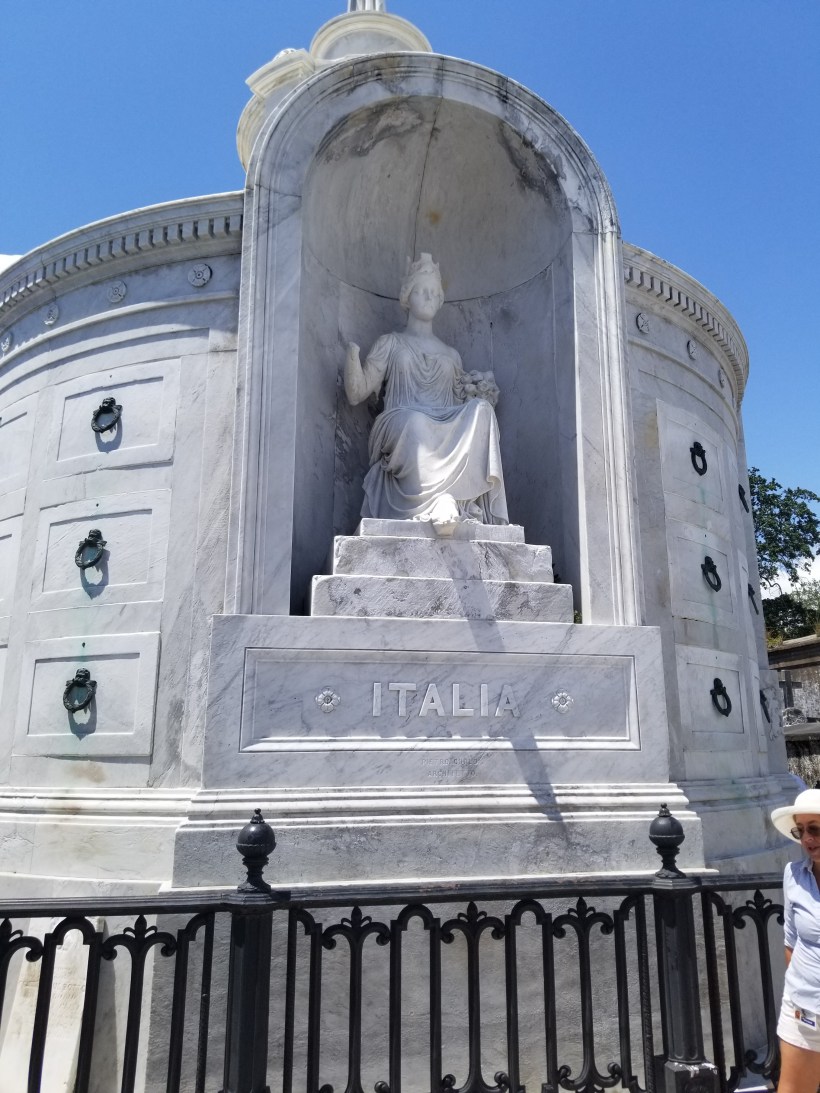
Italian Benevolent Society Tomb built 1857

Famous People

Of course the main reason I went on the tour was to see if any creepy things would happen. No such luck! It was a pretty easy tour without event. Homer Plessey, is interred at St. Louis #1. He was a fair skinned Black Haitian whose parents fled from Haiti during the revolution. and of course the Voodoo Queen herself, Marie Laveau. If you are ever in the Big Easy, be sure to book some of the walking tours that take you through the French Quarter. You won’t be disappointed, especially if you have a great guide that really knows the city.


Dr. William Wilson MD, PhD: A Pioneer in Science

William August “Bill” Wilson is one of the few physicians in my family. I met him two years ago when I traveled to Block Island, Rhode Island to meet and interview him for our Orme family history. There were a few gaps in my research and I was hoping he would be able to shed some light on this branch of our tree. Block Island is a quaint little island right off the coast of the state. A high-speed ferry takes you back and forth. Once on the island you have the option of renting bikes or walking through the main town.

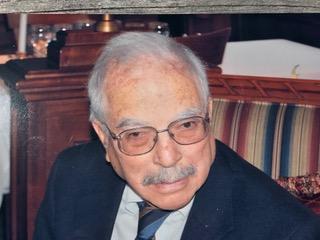
Bill Wilson
William August “Bill” Wilson Jr., MD

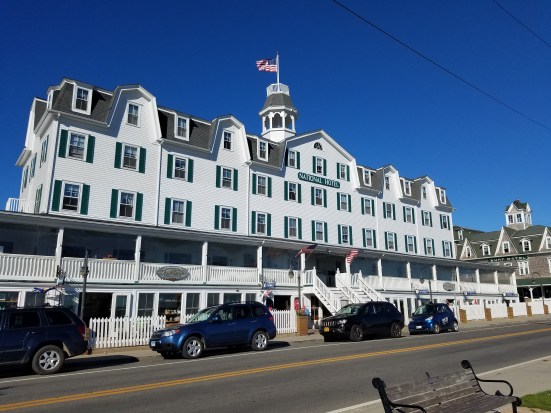
Bill’s son Willy who is a New York attorney, picked me up from the National Hotel where I was staying. The hotel was adorable. I wasn’t prepared for the hotel not having elevators or air conditioning (they turn off the air the last week of September) but it was a charming New England gem.

20160925_091528
My Hotel-The National Hotel

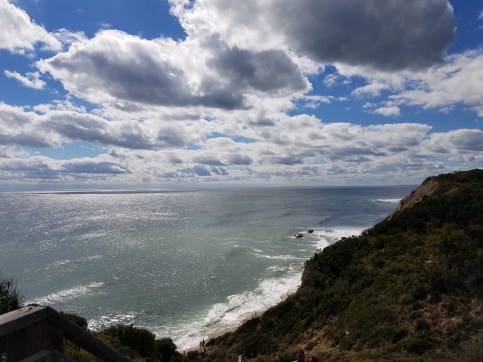
Willy was the ultimate tour guide of Block Island. We went to the Mohegan Bluffs a beautiful beach where people were still surfing despite the fact the it was well past Labor Day.

Mohegan
Mohegan Bluffs

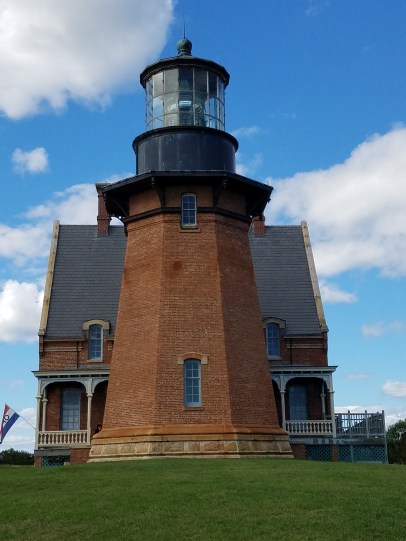
We also stopped at the Block Island Southeast lighthouse which is listed the National Historic Landmark

20160924_140409
South East Lighthouse

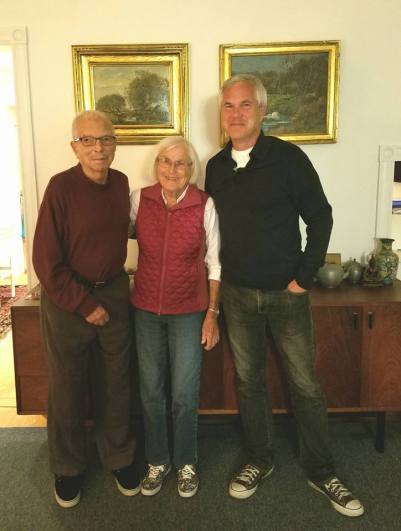
We finally wound our way around the island to Bill and Martha’s house. They bought the house in 1978 and eventually retired there. Bill and Martha were waiting on us. I could see Bill’s standing at the door. One of the first things I noticed about my 2nd cousin was he was a small quiet man. Bill at this time was 92 years old standing just 5′ 6″ at best. He had a burgundy sweater on and very sturdy tennis shoes. I would sit with Bill, his wife Martha and son Willie for the next few hours and attempt to capture this man’s entire life.

14446165_10154050747938215_2412858774224120788_n
Bill, Martha his wife and son Willy

Bill comes from a branch of the Orme family that for some reason, became separated sometime after 1950. No one in my family knew of him, let alone that he became one of few people of color to graduate from an East Coast medical school. He also shares the middle name August with many other Orme’s including a few Augusta’s on his mother side of the tree.

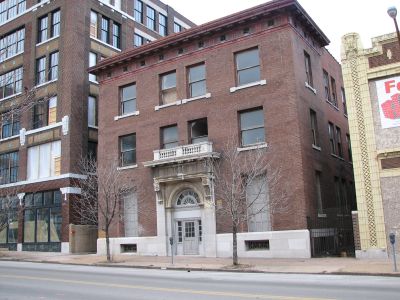
Bill was born in St. Louis, Missouri to William August “Gus” Wilson and Hallie Burles Wilson on July 3, 1924. Bill was born in the People’s Hospital by C-Section. The People’s Hospital was opened in 1894 as Provident and eventually changed names to People’s in 1918. It was one of three hospitals in St. Louis that served African-Americans. It still stands today although in disrepair.

hosp1
People’s Hospital today is abandoned

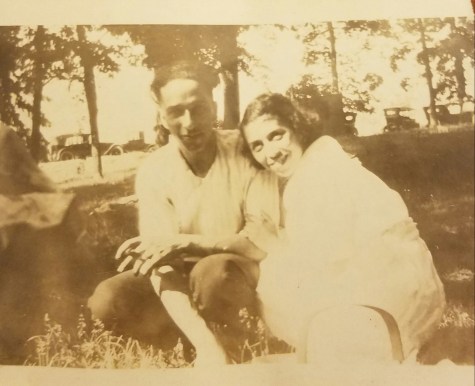
Bill’s parents were people of mixed race, William Wilson Sr’s. mother was my Great-Grand Aunt Mary Josephine Orme from Linn, Mo. William Sr’s father was to Bill’s estimation an unknown local white farmer. Mary Josephine was married to a man named Ben Wilson. At this time no one can explain who Gus’ father was but this revelation explains the difference in color between Gus and his other nine siblings. Gus completed the 8th grade and eventually would serve during WWI in a colored troop. Bill’s family would move to St. Louis around 1916 and his father Gus cleaned cars and was an occasional chauffeur.

20160924_221140
A young Gus Wilson and his wife Hallie Burles Wilson

His younger brother Halleck “Hal” was also born in St. Louis nine years later. Hal married and had 3 sons, staying in the Bay Area for the remainder of his life.

sid_3487_1952_0076
Halleck B. Wilson

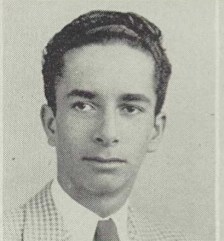
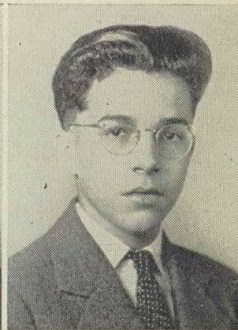
Bill was extremely intelligent and skipped several grades. He attended Sumner High school in St. Louis. Sumner was the first high school for African-Americans west of the Mississippi river. Bill graduated high school in three years at the age of 14 completing his last year in California. By 1937 Gus was laid off and his parents decided to move to give Bill a better opportunity. They followed another Orme cousin, Walter Orme to Oakland. Bill was 15 when he started college, graduating from the University of California, Berkeley, with a degree in psychology at the age of 19.

William August Wilson JR
One of Bill’s Yearbook pictures from Berkeley

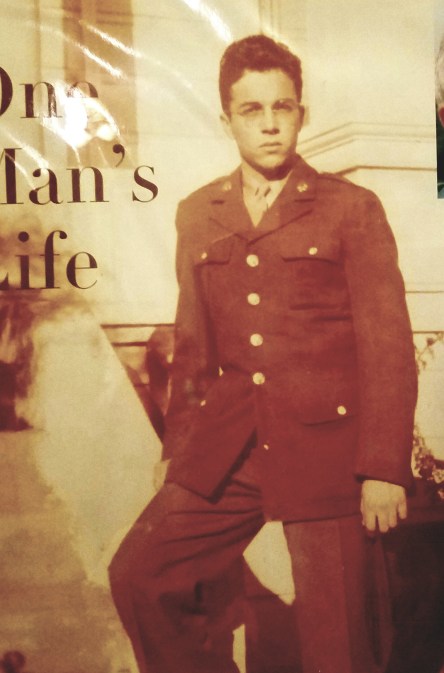
Bill stayed at home for 2 more years. When the WWII started he moved into a co-op and enlisted in the Reserve Corps. He started active duty on March 11, 1943 in the U.S. Army. He did his basic training at Camp Joseph Robinson in Little Rock, Arkansas. After training as a replacement specialist, he was sent overseas and traveled through Northern Ireland, England, France and finally Germany. He was serving in France when the Atom Bomb was dropped. He also visited a Japanese internment camp and was depressed by what he saw.

20160924_220800
Bill in his Army Uniform

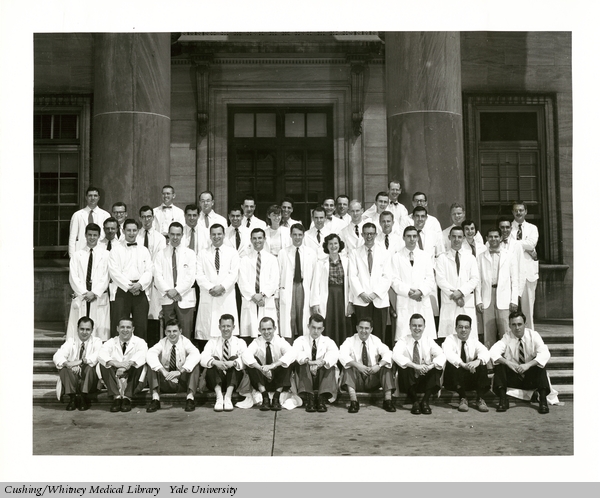
After the war Bill attended graduate school and applied for Medical School at Yale University ion Hartford, Connecticut. He worked in a lab and there he met his wife Martha Alice Nelson. They married September 27th, 1954 despite her families reluctance to accept their future son-in-law’s African lineage. Over time once Bill and Martha had children Martha’s parents came around. They had four children, Caroline, Harold, William III and Cathy.

In 1953 Bill graduated from Yale Medical with an MD-PhD degree, making him the first African-American to earn dual doctorates. He was certainly a pioneer in medicine and science as one of the few people of African descent to graduate from Yale Medical School during the first half of the century. Bill was also one of the few persons of color at the height of his career to work in neuroscience. Bill also had a long and successful academic career as a biopsychologist that included positions at the University of Colorado, Boulder; Bryn Mawr College; and the University of Connecticut. He served in a number of administrative posts while also engaged in research and teaching. He was an editor of the major journal in his field, the Journal of Comparative and Physiological Psychology, and was a member of a National Institutes of Heath grant-review study section. Most of Bill’s research dealt with brain/behavior relationships. That is, which brain structures involve learning, memory and perception.

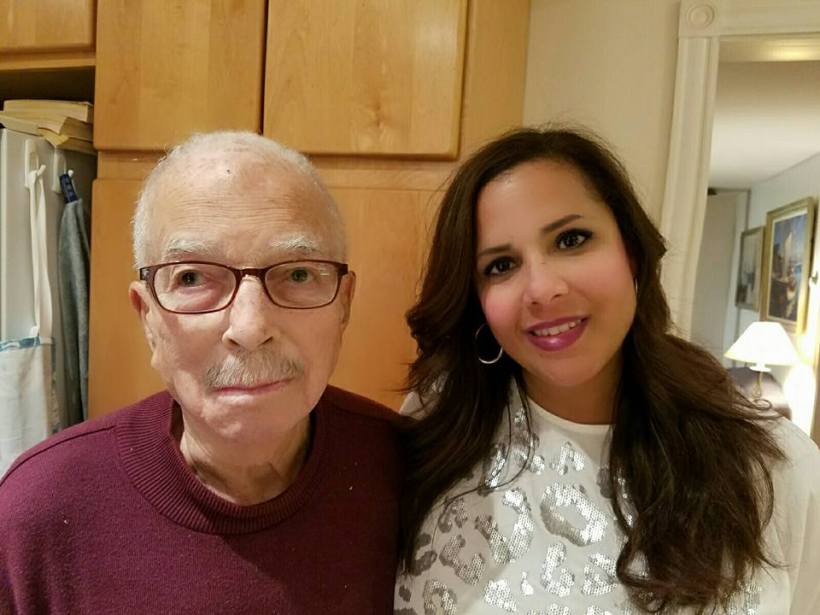
I really enjoyed my time with the Wilson’s and was saddened to receive a message in May 2017 that Bill had passed away. I certainly don’t believe that I have given is entire career justice but this was just a small snippet of what we do know of the Wilson-Orme Family branch.

14433011_10154050747823215_1195973039913717314_n
Bill and Family Historian Stefanie Sept 2016

A Baby In A Shoe Box

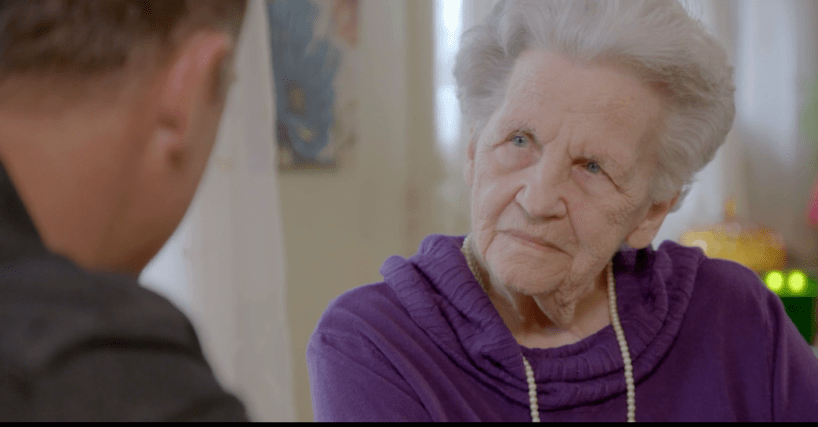
Screenshot 2018-11-15 at 7.46.43 PMBeing the daughter of an adopted woman for years I wondered who her mother was. When I was in college my mother hired a private investigator and found my grandmother Mabel who just recently passed away.  There are so many heart breaking stories out there about children being abandoned or given away and never locating or finding our the reason why they were given up for adoption. This season of “Long Lost Family” starts off with a jaw dropping revelation of a baby left in a shoe box at an Ohio gas station. The baby Lisa, now grown searches for her mother. Chris, one of the shows investigators locates an elderly woman in hopes of uncovering which of her family members may have given up a baby in 1960. She paused and answered, “Me.”

Follow the link below to watch the full heart stopping episode. Click here

WHY MOST BLACK PEOPLE DON’T HAVE “INDIAN IN THEIR FAMILY”

You’ve probably heard it before. Perhaps from your friends or some random person you met. More often than not, many Black people say that they have “Indian” in their family. So much so that it’s become a running joke in the Black community. But some really do believe that they do have a lineage of Native American in their bloodline because of the grade of their hair and/or high cheek bones. But in looking at the true line of African Americans, the truth is, many do not have “Indian in their family”. Here’s why:

Those high cheekbones and that straight black hair derive from our high proportion of white ancestors and not, for most of us, at least, from our Cherokee great-great-grandmother on your daddy’s side (*sigh*). DNA doesn’t lie (just ask Maury).

Here are the statistics: Whereas virtually all African Americans have a considerable amount of European ancestry in their genomes, only 19 percent have at least 1 percent Native American ancestry, and only 5 percent of African American people carry more than 2 percent Native American ancestry. How do these percentages translate into ancestry? Well, if you have 5 percent Native American ancestry in your mix, that means you had one Native American ancestor four to five generations back (120 to 150 years ago). If you have 2 percent Native American ancestry, you had one such ancestor on your family tree five to nine generations back (150 to 270 years ago). One percent of Native American ancestry means that this ancestor entered your bloodline six to 10 generations back (180 to 300 years ago).

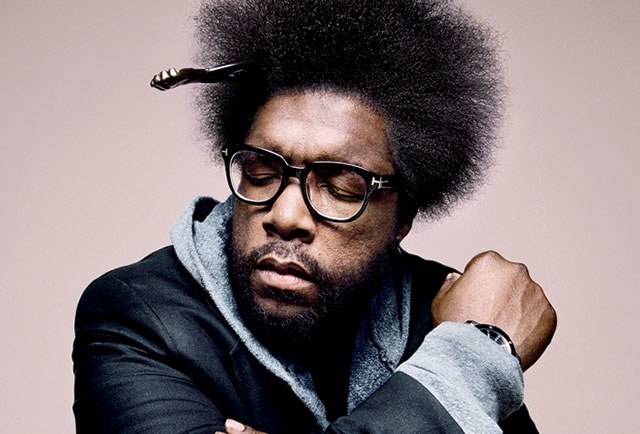
Questlove’s Unusual history

WOW! Did you guys watch the last episode of Finding Your Roots? I’ve uncovered alot of interesting African-American history but none as astounding as what Dr. Gates just found with Questlove (from the music group The Roots). Quest’ response tugged at the heart as he discovered his 3X great grandparents came on the last slave ship to enter the US and the only African-American on the show to have this discovery! Click here to see Time magazine clip

Photo credit: Vanity fair

Black Like Me

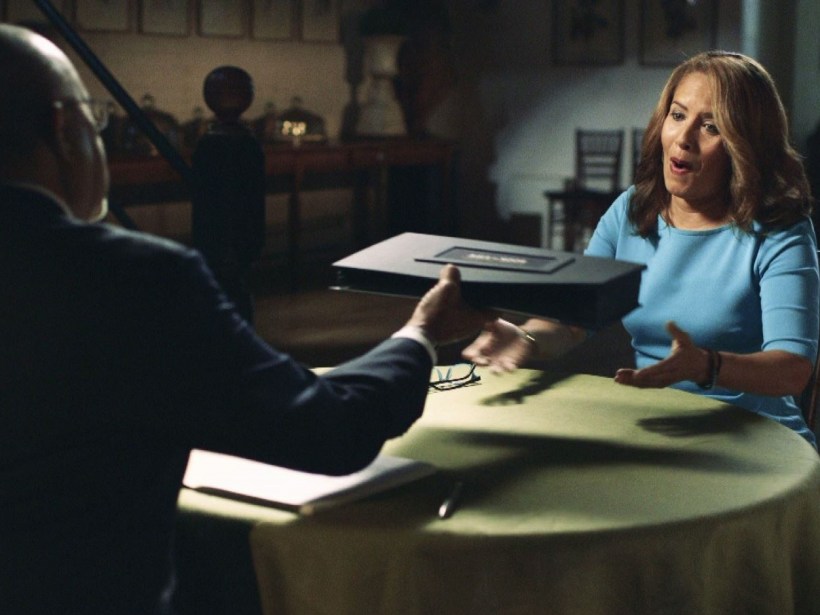
On this weeks episode of FYR-Suzanne Malveaux discovers that her roots include a black slave owner, a French-Canadian fur trader, and a Native American from the Kaskaskia tribe. Along the way, our guests are reminded that there is no universal African American narrative — that there are as many ways to be black as there are black people. Click here to see the preview

Malveaux-Roots