Does KCI airport have unmarked slave graves?

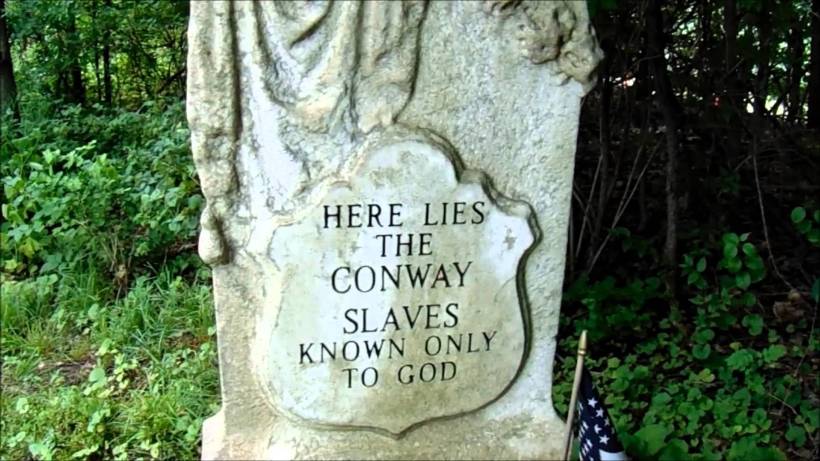
It’s a known fact the state of Missouri had slaves. Census records show that thousands of people lived on what is now the KCI airport including plantations. Most slave burial grounds did not mark graves with a headstone and even after emancipation, African-Americans could not afford a headstone. Sometimes the plot was marked with a simple stone or a saw palmetto plant.

Recently a group of concerned citizens have brought attention to the land that will be developed for the new Kansas City International Terminal might have unmarked slave graves. Bruce Watkins Jr. states, “It feels like we are being written out of history,” said Watkins, whose ancestors lived on plantations around KCI. “By saying it doesn’t exist or not documenting its existence, it pretty much writes us out of Kansas City and local history.” He would like to see the airport acknowledge and include the possibility that there may be unmarked slave graves on the property. KCI states that archeologist have taken core samples with nothing conclusive in 2006.

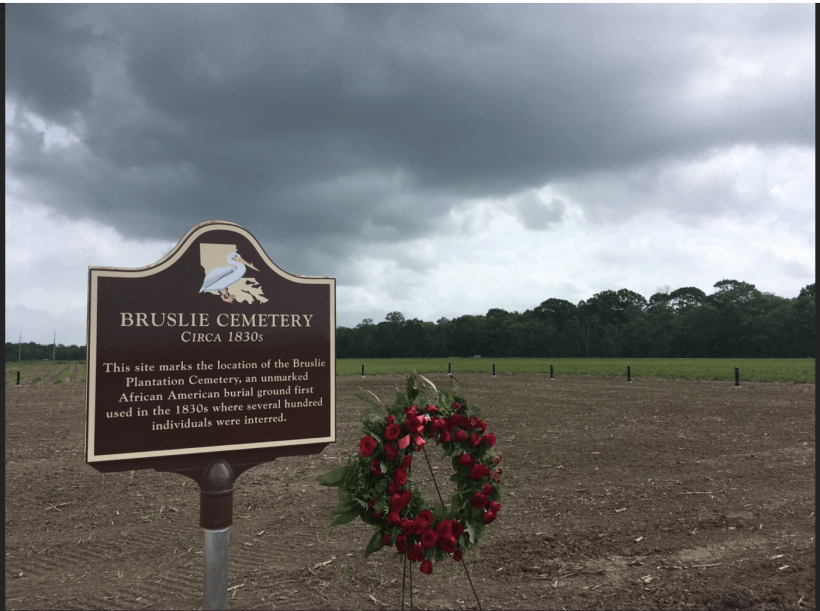
How does one find out if indeed there are multiple burial sites that would date back 150 years? This debate has been ongoing for 10 years with no visible proof other than white family plots that have already been identified or relocated. Recent interviews with locals have not uncovered much more other than supposition. However if they do discover the presence of graves KCI and Platte City council could borrow a page from Shell Oil. Earlier this year, Shell honored and remembered those buried on what used to be the Monroe and Bruslie sugar plantations, in Louisiana.

Screen Shot 2018-09-25 at 7.12.56 PM.png“We ought to work together to figure out how … to evaluate the things that we want to preserve, protect and teach about in terms of how this country was really developed,” said A.P. Tureaud Jr., the son of a revered New Orleans civil rights lawyer who counts slaves and slave-owners among his ancestors. Tureaud is working to give slave gravesites federal protection. Bruce Watkins Jr. and other Kansas Citians that share a common interest in preserving the sacred burial grounds on KCI land could introduce similar legislature that would protect current and future discoveries.
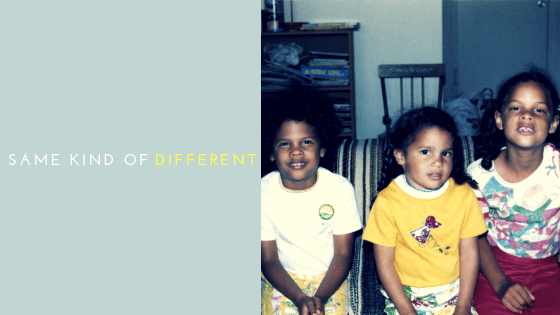

 

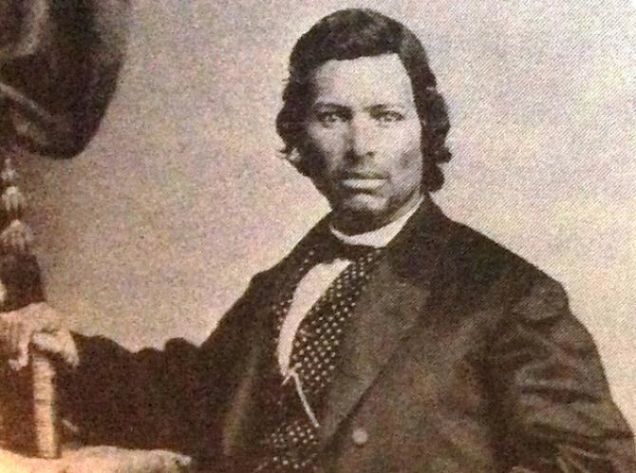
Photo of Bruslie Marker: Associated Press

Quotes Bruce Watkins Credit: KSHB


Why are my DNA results different from my sisters?

Shouldn’t my sisters and I have the same ancestry results for our DNA? We have the same parents…

Same Kind of Different-2.png

Because of how DNA is passed on, it is possible for two siblings to have some big differences in their ancestry at the DNA level.  DNA isn’t passed down from generation to generation in a single block. Not every child gets the same 50% of mom’s DNA and 50% of dad’s DNA. (Unless of course they are identical twins).

This has consequences in terms of how much DNA siblings share. And even more significantly, what DNA they share.

Rafi Mendelsohn, director of PR and Social Media for MyAncestry.com, has a great analogy: “You can test two siblings. You think they should get similar results. But the best example is chicken soup. You add vegetable, chicken and spices, and then ladle out a bowl. Then you ladle out another. There’s a bit more chicken in one bowl, a bit more vegetables in another bowl. Both siblings get their DNA from the same pot. It just comes out different in every bowl.”

Hope that helps!

Hunt for the Golden State Killer


Websites that do DNA testing for family matches have recently been used to search for criminals including the elusive Golden State Killer. The use of using these sites for DNA has come under ethical scrutiny. Some sites, do have a disclaimer that your samples may be used for other purposes. To read the latest on how detectives used DNA matches  Click here

Are Mormons baptizing your Jewish ancestors?

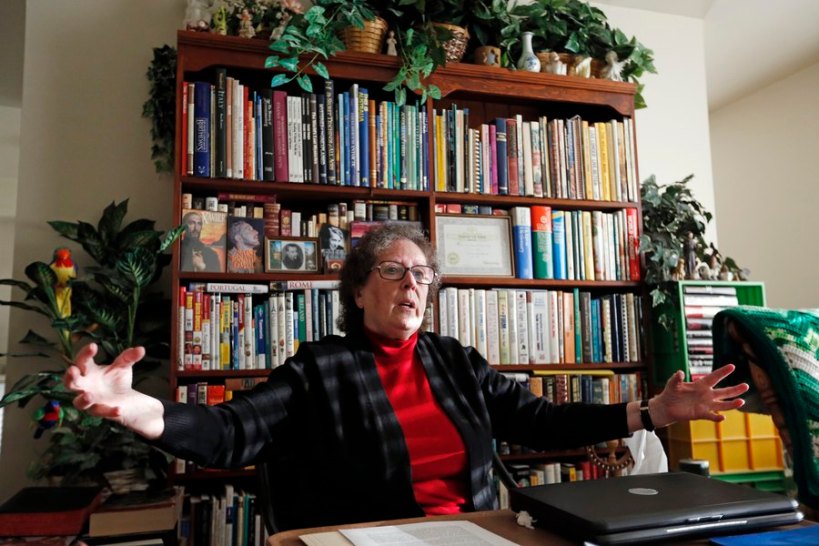
By Brady Combs AP Dec 21, 2017 Photo credit of Helen Radkey (AP Photo/Rick Bowmer)

Mormons are posthumously baptizing Holocaust victims as well as grandparents of public figures like Donald Trump, Hillary Clinton and Steven Spielberg, despite church rules intended to restrict the ceremonies to a member’s ancestors, according to a researcher who has spent two decades monitoring the church’s massive genealogical database.

 The discoveries made by former Mormon Helen Radkey and shared with The Associated Press likely will bring new scrutiny to a deeply misunderstood practice that has become a sensitive issue for the church.

The Utah-based faith, in a statement, acknowledged the ceremonies violated its policy and said the rites would be invalidated, while also noting it has created safeguards in recent years to improve compliance

     Proxy baptisms are tied to a core church teaching that families spend eternity together, but the baptisms do not automatically convert dead people to Mormonism. Under church teachings, the rituals provide the deceased a choice in the afterlife to accept or reject the offer of baptism.

     The Church of Jesus Christ of Latter-day Saints is the only major religion that baptizes for the dead, and the ritual has contributed to struggles by the faith to combat the mischaracterization of its beliefs.

     The church’s stance on family and the afterlife is behind a massive collection of genealogical records the faith compiles from around the world and makes available to the public through its website http://www.familysearch.org . Proxy baptisms are recorded in a password-protected part of the database accessible only to church members.

     The ceremonies first drew public attention in the 1990s, when it was discovered they were performed on a few hundred thousand Holocaust victims, which Jewish leaders condemned as grossly insensitive.

     The posthumous baptizing of Holocaust victims reopens Jewish wounds from being forced in the past to convert to Christianity or face death or deportation, Jewish genealogist Gary Mokotoff said.

     The LDS Church in 1995 established a rule barring baptisms of Holocaust victims except in rare cases where they are direct ancestors. It also bars proxy baptisms on celebrities.

     But periodic controversies erupted when new proxy baptisms were found listed in the church’s genealogical database, including Radkey’s 2012 discovery of one performed on Anne Frank. The church apologized then, sent a letter to members reiterating its guidelines and announced the creation of a firewall aimed at preventing the inappropriate use of proxy baptisms. Click here to read entire article


Strawberry Hill-A lesson in ethnic preservation


Hunt for the Golden State Killer 8.55.20 PM

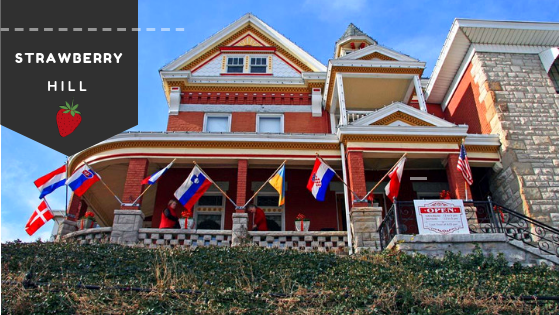
If you are from Wyandotte County, you undoubtedly have heard of Strawberry Hill. Settled by Baltic-Slavic immigrants, the area still serves as a reminder of how diverse KCK is. “The Strawberry Hill Ethnic Cultural Society was formed in 1988 to promote, sponsor and preserve the ethnic heritage prevalent in Kansas City, Kansas. The Strawberry Hill Museum and Cultural Center celebrates the many nationalities of Kansas City residents. Built in 1887, the the core building is an outstanding example of Victorian Queen Anne Style architecture and was home to the Cruise-Scroggs family for 32 years. In 1919, the mansion was opened by the Sisters of St. Francis of Christ the King, to care for children orphaned during the 1918 influenza pandemic. The orphanage, operated in connection with St. John the Baptist Catholic Church, closed in 1988 for conversion to the Strawberry Hill Ethnic Cultural Society”. The museum is closed for tours until March 3rd. Click here for more information

Questlove’s Unusual history

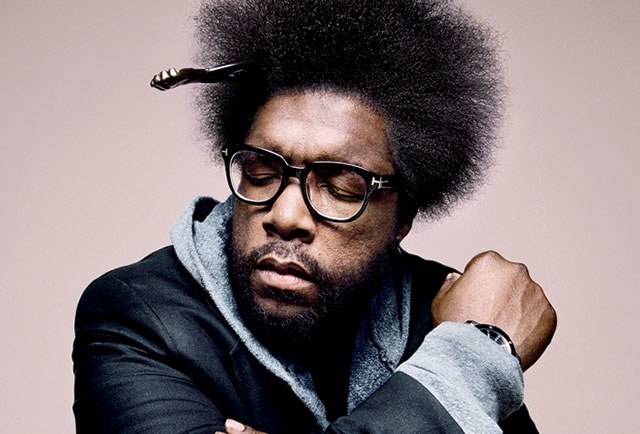
WOW! Did you guys watch the last episode of Finding Your Roots? I’ve uncovered alot of interesting African-American history but none as astounding as what Dr. Gates just found with Questlove (from the music group The Roots). Quest’ response tugged at the heart as he discovered his 3X great grandparents came on the last slave ship to enter the US and the only African-American on the show to have this discovery! Click here to see Time magazine clip

Photo credit: Vanity fair

Holocaust memorial Museum

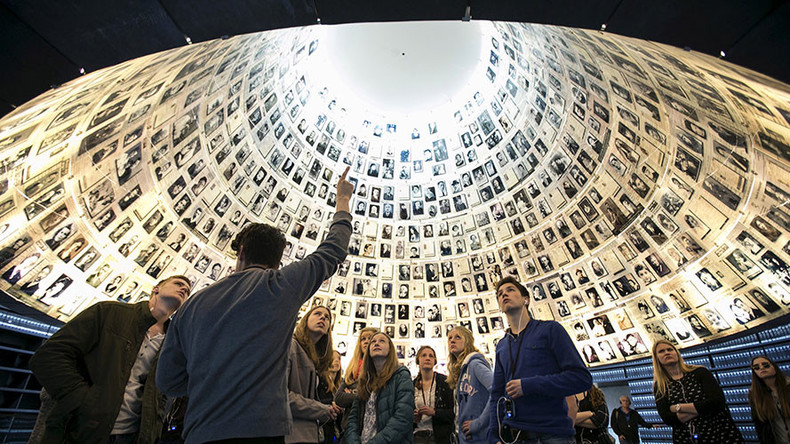
A few years back I visited several Smithsonian museums in DC. I didn’t have time to visit the US Holocaust Memorial museum but will make an attempt next summer at my family’s reunion. “The Holocaust was the systematic, bureaucratic, state-sponsored persecution and murder of six million Jews by the Nazi regime and its collaborators. Holocaust is a word of Greek origin meaning “sacrifice by fire.” The Nazis, who came to power in Germany in January 1933, believed that Germans were “racially superior” and that the Jews, deemed “inferior,” were an alien threat to the so-called German racial community.” Finding your Jewish roots can be difficult with immigration into the US. Let me help you get a start and we will see what we can find. In the meantime, if you are in Washington DC, you don’t want to skip over this great piece of preserved history. PS Bring a hankie! Click here for more museum info

June 2018-Update-I visited the museum this summer and you MUST go. It was extremely powerful!

Black Like Me

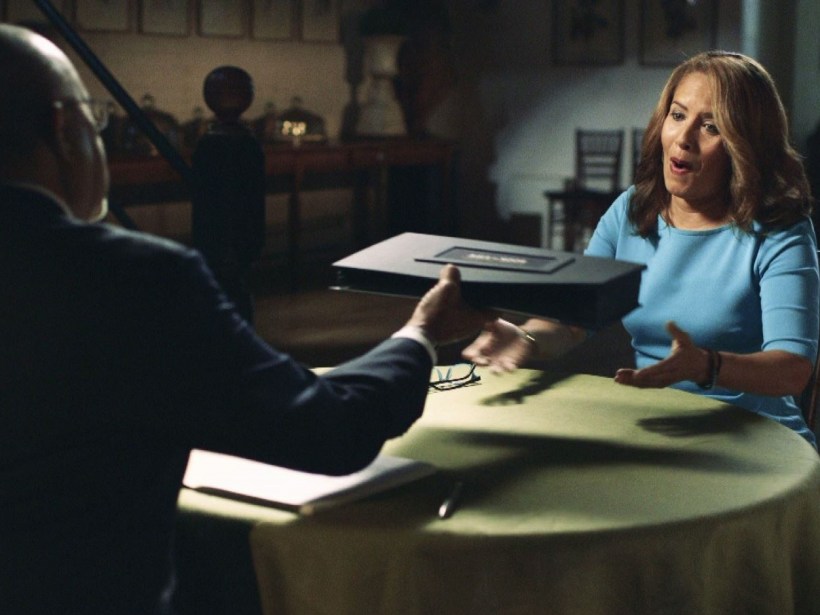
On this weeks episode of FYR-Suzanne Malveaux discovers that her roots include a black slave owner, a French-Canadian fur trader, and a Native American from the Kaskaskia tribe. Along the way, our guests are reminded that there is no universal African American narrative — that there are as many ways to be black as there are black people. Click here to see the preview

Malveaux-Roots

Those Spooky Old Cemeteries

I’ve spent a lot of time in cemeteries lately. One of the prettiest is the St. Aubert Cemetery in St. Aubert, Mo. High on a hill overlooking the St. Aubert chute and railroad tracks, hundreds of years of history rest including my family.

st aubert cem


But the first time I went there I wasn’t so enchanted! I was alone with my two dogs and my .38 revolver. I was more afraid of snakes and bobcats than people through. An old church rests halfway up the hill and when I was done researching I decided to get out and look at it. When I came around the corner of the small building I saw beer cans. I cocked my head thinking ‘ wow, how old must those be?’ Then I realized they were modern day cans and the hair on my neck tingled. Time to go!

I later asked the town folks and they said it was probably some teens hanging out. At any rate, a wealth of info can be found in cemeteries.

1896872_10152575294788215_7883242120877382025_n


If you find an ancestors death certificate with the burial site it might be worth it to visit and get pictures if they aren’t available on Find a Grave. Here are some tips on how to research local cemeteries